The Playlist Prompter: How to Talk to Spotify's New Brain
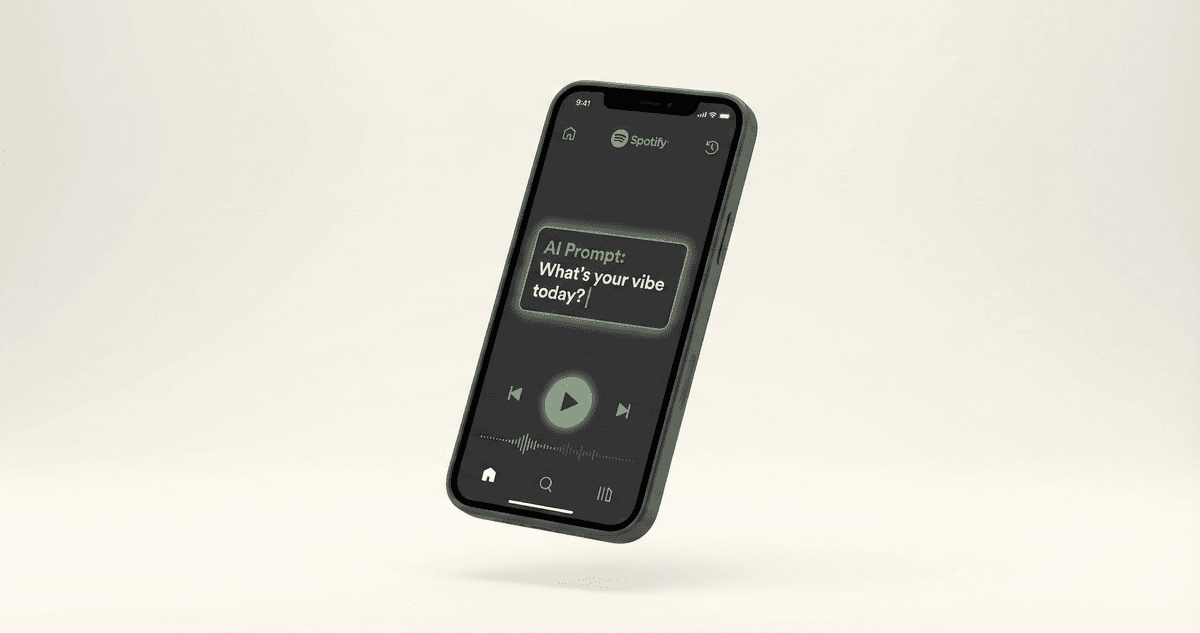
Remember when finding new music meant trusting a friend with good taste or waiting for the radio DJ to bless you?
Then came the algorithms. "Discover Weekly" was cool, but it was a black box. You listened, it guessed, and sometimes it missed.
Well, Spotify just handed us the keys to the box.
With the rollout of Prompted Playlists this month, we've moved from passive listeners to active directors. You don't just hope for a vibe anymore; you order it. It's like having a DJ in your pocket who actually listens to your weirdly specific requests.
Here is what you need to know about talking to Spotify’s new brain.
The New Feature: "Prompted Playlist"
If you are a Premium user in the U.S. or Canada, you might have noticed a new option when you hit the "Create" button in your library. It’s called Prompted Playlist, a feature released in beta earlier this year.
Instead of dragging songs one by one, you get a text box. You type in a description—a feeling, a scenario, a contradictory mess of genres—and Spotify’s AI builds a 30-song playlist in seconds.
And it’s not just a random shuffle. It uses your history to make sure your version of "sad songs for a rainy Tuesday" sounds different from mine.
"About the Song"
They also quietly dropped About the Song. Now, when you're listening, you might see a card pop up with facts, lyrics meanings, and context about the track. It’s like Pop-Up Video for the streaming age (if you’re old enough to remember that).
How to Prompt: A Quick Guide
Talking to an AI is a skill. It’s not keyword searching; it’s describing. The better you describe the vibe, the better the playlist.
The Formula
[Vibe/Emotion] + [Activity/Setting] + [Genre/Era Constraint]
I Tried This: The "Heavy Bag" Test
I teach a boxing class on Tuesdays. I’m 29, so I want that specific era of 2010s blog-era hip-hop mixed with the new stuff. I don't want generic "gym techno."
My Prompt:
"High-energy hip-hop for a boxing workout. Focus on lyrical rap with heavy beats. J. Cole's 'The Fall Off' energy mixed with 2014 Drake and Kendrick. No mumble rap. Aggressive but soulful."
The Result: Spotify played chess, not checkers. It opened with a track from Disc 29 of Cole’s new album (scary accuracy), transitioned into "0 to 100" by Drake, and kept the energy fighting-weight ready.
Why it worked:
- Specificity: Referencing a specific new album ("The Fall Off") gave it a current anchor.
- Era Locking: "2014 Drake" signals a very specific production style (dark, booming).
- Negative Prompt: "No mumble rap" filtered out the trap beats I didn't want.
Level Up Your Prompts
If you want to get better at talking to Spotify (and any other AI), you need to borrow some moves from the "Prompt Engineering" playbook.
1. Bridge the Intent Gap
We often think the AI knows what we mean by "good music." It doesn't. You need to provide the context. This is the core concept of The Intent Gap: don't just ask for the result, explain the situation.
- Bad: "Play something chill." (Too vague).
- Good: "Play something chill because I am stressed and need to lower my heart rate." (Context bridged).
2. Use the Persona Mirror
Notice how I told the AI "I teach a boxing class"? That wasn't just flavor text. I was using The Persona Mirror. By telling the AI who I am (or who it should be), I narrowed down its search from "all songs" to "songs for a 29-year-old boxing coach."
3. Show, Don't Just Tell
Adjectives like "aggressive" are subjective. My "aggressive" might be your "annoying." Instead of relying on adjectives, Show the AI what you mean by referencing specific artists or albums. References are the shortcut to a perfect vibe. (Read more about why examples beat adjectives in Showing, Don't Just Tell).
4. The "Refresh" Rule (A Skeptic's Tip)
Sometimes, the AI just misses. It happens. If the playlist is 50% wrong, don't try to "fix" it by editing the prompt slightly. Start over. It’s faster to generate a fresh batch than to argue with a confused robot.
Other Prompts to Try
- The "Main Character" Energy: "Songs for walking into a room in slow motion like I own the place. Heavy bass, confident lyrics, 2010s hip-hop."
- The Dinner Party Saver: "Background music for a dinner party with friends who have wildly different tastes. Nothing offensive, mostly acoustic, warm vibes."
- The Genre Blender: "A battle between upbeat country and 80s pop. Make them fight."
The Signal: What This Means
This isn't just a fun toy. It’s a massive signal to the industry.
For Artists
Discovery is about to get even more data-driven. If people start prompting for "moody acoustic covers of metal songs," and you're an artist making that, you suddenly have a direct line to listeners. You don't need to fit a standard genre bucket anymore; you just need to fit a vibe.
For The Industry
We are moving from Curation (human editors making playlists like "Rap Caviar") to Generation (AI making playlists for you).
Human tastemakers aren't dead, but they are getting a robot assistant. The power is shifting from the "Editorial Team" to the user's imagination.
Why You Should Care
Because it makes technology feel human again.
Standard algorithms optimize for "retention"—they play what keeps you listening. Prompted Playlists optimize for intent. You are telling the app exactly what you want right now, not what you wanted yesterday.
It’s personal. It’s specific. And honestly? It’s just fun to see what it comes up with.
So go ahead. Open the app. Ask for "songs to sing in the shower when I'm angry at my toaster." See what happens.
We bet it has a song for that.

Want to keep learning?
Get our free AI Starter Kit — 5 lessons delivered to your inbox.
Join readers learning AI in plain English. No spam, ever.